The True Cost of Managing Security Deposits (And What Modern Properties Do Instead)

Security deposits may feel like a solved problem: collect them at move-in, hold them in a designated account, return them at move-out. It’s been the standard practice for decades.
But standard doesn't mean cost-free. When you account for staff time, legal exposure, and administrative complexity at scale, the traditional deposit model creates more friction than most operators realize.
The Hidden Time Cost
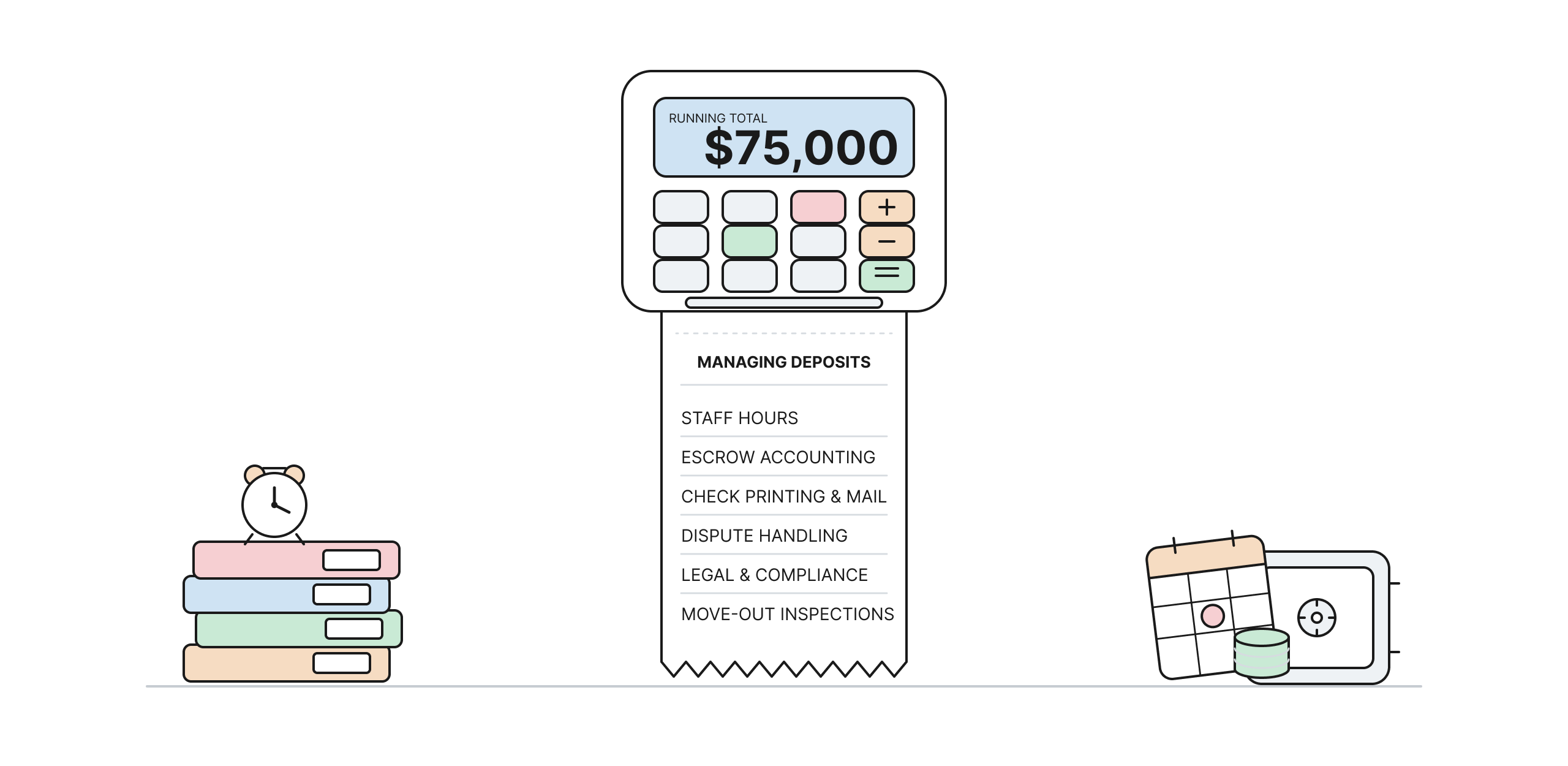
Move-in processing seems simple: collect, document, deposit, record. In practice, it means verifying receipt, ensuring funds land in the correct account (legally required to be separate from operating accounts in most states), logging the amount, and providing written confirmation within state-mandated timeframes.
Move-out is where complexity compounds: Inspection documentation, statutory return deadlines that vary by state from 14 to 45 days. And if there's a dispute, add collections or small claims litigation on top.
Obligo data estimates put the full lifecycle cost of managing security deposits at roughly three hours of staff time per deposit. For a company processing 200 annual move-outs, that's 600 hours and $15,000 in labor annually, before any dispute costs.
What Modern Portfolio Operators Are Doing
The shift in the industry isn't about reducing or eliminating financial protection. Instead, it’s focused on delivering that protection more efficiently.
Obligo replaces the cash security deposit with a guaranteed payment method on file for properties. Properties retain full ability to collect for damages or unpaid rent. The administrative overhead of holding, tracking, and returning cash is eliminated entirely.
- At move-in: no escrow entry, no funds to track.
- During tenancy: no interest accrual or reconciliation to manage
- At move-out: if there are charges, the property submits them through their PMS and payment is initiated via ACH. If there are no charges, there's nothing to refund and no forwarding address to chase.
Want to estimate the ROI of implementing Obligo across your portfolio? Try this tool.
Embedded Workflows and Financial Backing
Obligo let's you stay within your PMS including Yardi, RealPage, AppFolio, Buildium, Entrata, and MRI, so residents see their options within the existing leasing experience, and property teams see the same ledger entries they're used to. Implementation typically means enabling a few settings and configuring which options to offer.
On financial protection: Obligo uses bank-issued Letters of Credit through Wells Fargo and HSBC, not peer-to-peer insurance or a resident-repay surety bond. That distinction matters when you actually need to collect.
The Operational Case
Three hours per deposit. Statutory deadlines. Escrow compliance. Dispute overhead. For any meaningful portfolio, these are a recurring drag that most operators have accepted as the cost of doing business.
They don't have to be. Less administrative time per turn. Less legal exposure. Faster leasing and move-out processing. And a leasing offer that converts better and attracts a broader applicant pool.
It's an upgrade for both your teams, and your residents.
Estimate the impact that implementing Obligo across your portfolio could have here.
Obligo integrates with Yardi, AppFolio, Buildium, Entrata, and MRI. Property protection is backed by bank-issued Letters of Credit through Wells Fargo. Learn more at obligo.com. *Non-refundable fee applies to no-deposit and reduced deposit plans.

.png)
